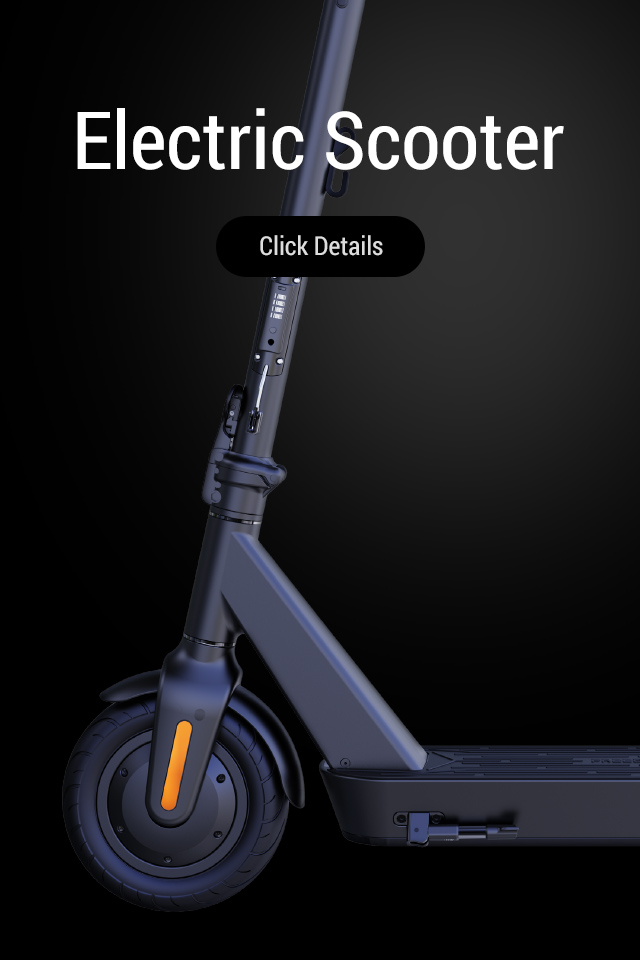
Choosing an electric scooter manufacturer is a decision whose record matters beyond the first enquiry — through later specification, warranty and documentation conversations, and through any reorder or range discussions that follow. Do not reduce the selection process to a spreadsheet of unit prices from suppliers whose actual capabilities have not been examined. Price matters — but it is the last thing to compare, because it only means something once you know what each supplier is actually selling. This checklist orders the evaluation in this sequence: production reality first, then testing and documentation, then the sampling relationship, and only then commercial terms.
1. Establish what the factory actually makes
One question belongs early in scooter sourcing: which parts do you make yourselves? A manufacturer with its own injection moulding, coating, welding, moulding and tooling workshops — the structure this factory describes, with most parts made in house — presents a structure a buyer can verify against a checklist. Whether that structure delivers reorders that match the approved sample is exactly what the written specification, retained samples and reorder terms are there to establish; in-house production alone is not proof of it. Ask, before the first order, how colour and finish changes are handled and who answers engineering questions, and record the answers with the quotation.
Follow the question with specifics. Wheel production is a good probe: scooters live on their wheels, and a factory running its own PU wheel line across the diameters its products use can be asked a precise question — which of its products' wheels does that line supply, and will it confirm the answer in writing for the model you are ordering? Tooling is another: ask whether the factory has a tooling workshop, and ask who would adjust and maintain moulds for the model being quoted, with the answer confirmed in writing — do not infer a schedule from the workshop list alone. Neither answer requires a site visit to begin — but both should be verifiable, through photographs, video walk-throughs and, for serious programmes, an inspection visit or a third-party audit.
2. Test the testing
Ask what the laboratory does, and listen for specifics rather than adjectives. A credible answer names test references: battery transport testing such as UN 38.3 for the electrical side, water-resistance checks in the IPX family, mechanical standards matched to the product type, chemical screening for materials, packaging drop tests for the shipping carton. This factory describes exactly that vocabulary in its laboratory overview. Then ask the second question, the one that separates documentation from decoration: which reports support the specific model I am ordering, for my market? The honest answer structure is that certificates and reports are available upon request and confirmed per model and order — any supplier who waves a generic wall of certificates at every product question is telling you something, and it is not reassuring.
3. Judge the sampling process
Samples belong early in the checklist. Ask what the factory needs to know before it quotes a sample — your market, your rider and your price position among it — and record which questions it asks and which answers it gives. Ask how the approved sample will be treated — retained and referenced in the programme file, rather than handed over as a sales gift — and record the answer. Be clear about what a sample can and cannot show: a sample shows the configuration as sampled; what later production would require belongs in the written programme terms rather than being inferred from the sample. Note how the sampling conversation itself was handled — the questions asked, the answers recorded — as part of your selection record.
4. Examine range depth in your category
A manufacturer whose catalogue carries real depth in your line — here, twenty-three electric scooter references across the JB500, JB516, JB520 and JB55x families — gives a buyer more references to discuss for new price rungs or refreshed variants. Adjacent categories such as electric bicycles, kick scooters and parts can be raised in the same supplier conversation, but which lines the company manufactures itself and which it supplies from catalogue — and which processes and quality arrangements apply to each — are confirmed line by line in writing, not carried across from the scooter line. Depth alone does not establish that a category is a core business, or what support a later reorder would receive; ask how long the category has been in the catalogue and what reorder terms would apply, and record the answers.
5. Only now, compare commercial terms
With capability established, terms become meaningful. Compare quotations that state the same things: the sampled specification, branding and packaging as agreed, MOQ for that configuration, production lead time — including the start point it runs from, stated as a term in the quotation — inspection arrangements and the documentation package. A factory that confirms terms per programme in writing, rather than advertising a universal price, states its terms that way. Compare like with like: a quotation can only be read against the configuration it actually covers. Read the wholesale electric scooters page for how that structure looks in practice.
The decision, summarised
Choose the manufacturer whose production you can describe, whose testing vocabulary matches your product, whose sampling process records your approved unit in writing, and whose range gives your programme further references to discuss. Then negotiate price — hard, but last. When you are ready to run this checklist against a real factory, the OEM electric scooter page and the contact page are the way in.
Red flags worth walking away from
The checklist above describes what to look for; experience adds what to look out for. Be cautious with a supplier who cannot explain which parts it makes and which it buys, since without that explanation a buyer cannot record which production routes apply to the model being quoted. Be cautious with instant, unconditional answers on documentation: ask which model and which market a documentation answer covers, and record the answer against that model and market, since the reports a programme relies on are the ones confirmed for the specific product and market. Be cautious with quotations issued before any sampling conversation, priced on a photograph: ask what specification such a quotation assumes, and record the answer, since the specification behind it has not yet been confirmed. And be cautious with pressure to skip the pre-production sample: ask what would be confirmed in its place, and record the answer, since the sample is the reference the checklist sections above ask the buyer to retain.
None of these cautions requires suspicion as a working style. Put the questions in this checklist to each candidate supplier, and record each supplier's answers in your selection file; how a given supplier responds is a fact of that supplier's own answers, to assess from the record rather than assumed in advance.
A final practical suggestion: run the checklist in writing. Score each candidate supplier against the five sections, keep the notes with the quotations, and make the decision a document rather than a memory. Programmes outlive the people who start them, and a written selection record is what lets a successor understand — two years and four reorders later — why this factory was chosen, what was promised, and what the approved sample in the corner of the warehouse is for.
And keep the checklist itself alive: after the first production run, score the chosen factory again against the same five sections, while the experience is fresh. The gap between the selection scores and the delivery scores is a useful sourcing document for a distributor to keep, and it gives the second programme's decision — expand, hold or change — a written record to refer to.
Send model references, your target market and branding requirements — MOQ and lead time are confirmed per quotation in writing.
Request a Quotation