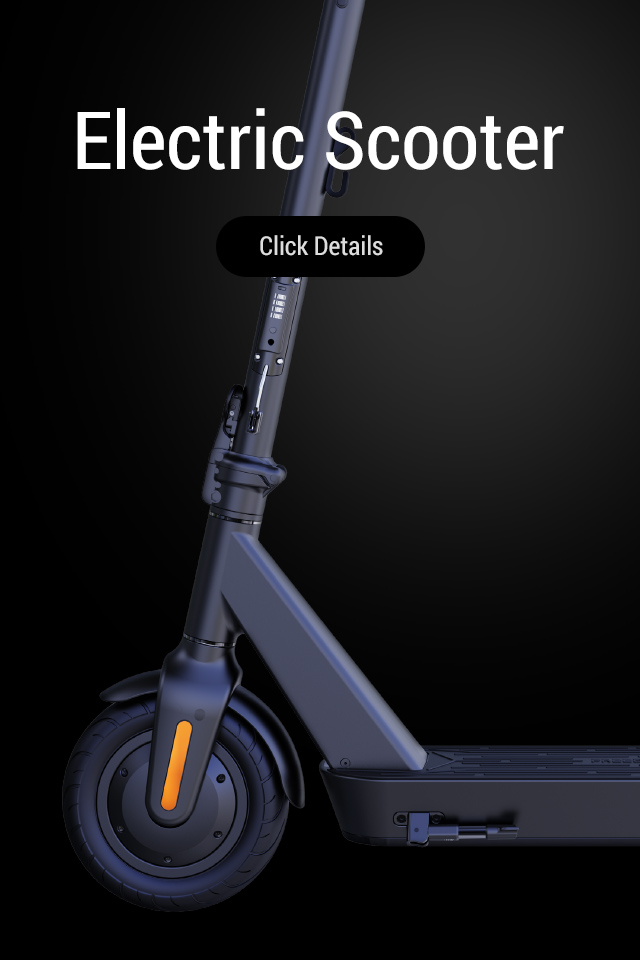
An OEM electric scooter programme starts from a catalogue and a brief. Zhejiang Jinbang Sports Equipment Co., Ltd. lists twenty-three electric scooter model references in its current catalogue — the JB500 and JB516 families, JB520 through JB545, JB523A, JBE001 and the JB554 to JB557 series — and a private-label enquiry can be raised against those references. Which parts of a programme each side would carry, who owns any moulds involved, and which production arrangements would stand behind a specific programme are not stated by the catalogue list or by the company's company-level statement that most parts are made in house; they are items to confirm in writing for the programme at quotation.
What an OEM programme can adjust
A programme can be described at three depths. At the surface, branding and packaging: your logo, colourway selection — with the coating methods available for the programme confirmed in writing — and retail or e-commerce packaging built around your channel. In the middle, configuration: wheel specification — the company operates its own PU wheel line, and whether the wheels for your programme are supplied from that line is confirmed in writing at quotation — plastic part colours agreed against the materials and processes confirmed in writing for the programme, and accessory bundles matched to your price position. At the deepest level, variant development: the company describes a tooling workshop at company level; whether part-level changes are feasible for a given programme, and which workshop or route would handle them, is confirmed in writing at quotation. MOQ and lead time for each depth, and for the programme as a whole, are confirmed in writing for that programme at quotation rather than printed.
The sampling rhythm is a recorded step for both sides. A first sample proves the platform and the branding execution; a pre-production sample is the reference against which the shipping configuration is agreed — it does not by itself prove what will ship, so the agreed configuration belongs in the written programme terms. Electrical and battery diligence runs in parallel — the laboratory describes UN 38.3 battery transport testing and IPX5/IPX6 water-resistance checks among its capabilities, and the reports supporting your model and market are confirmed in writing: Certificates available upon request.
OEM beyond scooters
Other wheeled lines can be raised in the same brief-first way where buyers build multi-category brands: custom skateboards and the electric bicycle family are discussed on that basis. Declaring the full brand architecture in the first enquiry gives the factory the questions in one place; whether sampling and production for more than one line can be planned together for a specific programme is confirmed in writing for that programme, not assumed. Massage guns sit outside that production programme: they are a catalogue supply line (see the guide), and any private-label massage gun enquiry is confirmed separately in writing, not planned as factory production.
Starting the conversation
Send your target category positions, the catalogue references closest to your intent, your branding assets and channel, and your expected launch quantity to [email protected] to request a quotation. MOQ, specification and lead time will be confirmed in writing for the programme you describe — the more precise the brief, the more useful the first reply.
What a good OEM brief contains
A brief for an OEM programme can be written item by item. It names the rider and the use case, the price position the product is intended to hold at retail, the features the marketing will use, the features that can be traded away, and the markets the product will enter — because market choice shapes the documentation conversation from the start. Add your launch window and your first-year volume expectation as stated figures. None of this commits you; each item is a question for the factory's written confirmation, and the sampling discussion is recorded against the brief as written.
Treat documentation as a production item, not an administrative afterthought: the market-entry paperwork for your chosen configuration should be tracked on the same calendar as sampling and mass production, with owners on both sides. Tracking it this way is a planning discipline; it does not by itself guarantee a launch date.
Send model references, your target market and branding requirements — MOQ and lead time are confirmed per quotation in writing.
Request a Quotation